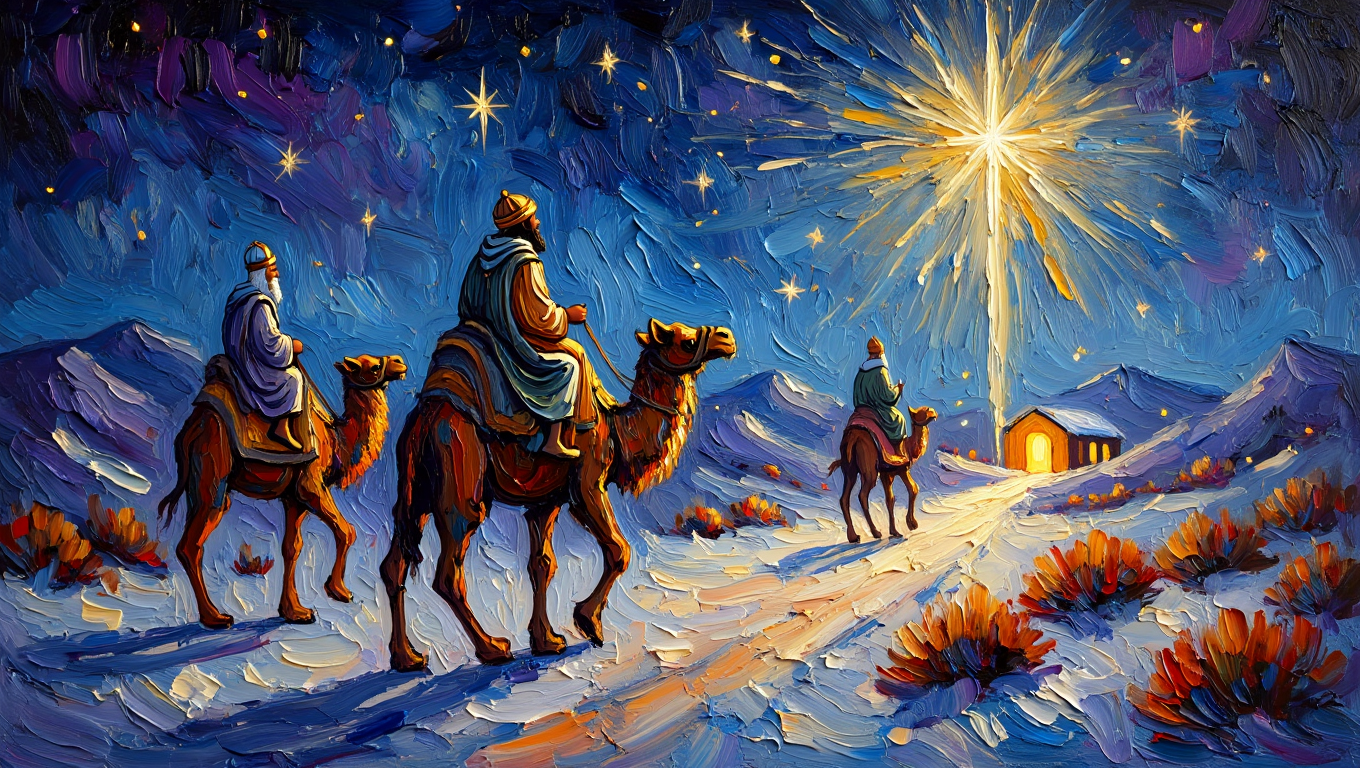
Christmas is one of the most exciting seasons of the year — full of twinkling lights, cheerful music, beautifully wrapped gifts, and family gatherings that make our homes feel alive. Yet beneath all the traditions, shopping lists, and holiday chaos lies a deeper truth that still has the power to change lives: God came to be with us.
If you've ever felt like Christmas has become more about the wrapping paper than what's inside, you're not alone. The real meaning of Christmas often gets buried under layers of cultural expectations and commercial pressure. But here's the good news (literally): the original Christmas story is far more profound — and far more personal — than we often remember.
The Bible calls this pivotal moment Emmanuel — which translates to "God with us" (Matthew 1:23). Christmas is not simply about a baby in a manger, though that image captures our hearts every year. It's about God stepping into human history to restore, redeem, and draw us back to himself.
According to Pew Research Center, while Christmas is widely celebrated across America, understanding the biblical meaning behind it varies significantly. Many people celebrate the holiday without fully grasping the theological significance of what Christians call the Incarnation — God becoming human.
When we return to the nativity story found in the Gospels of Matthew and Luke, three themes shine brightly through every verse: joy, peace, and praise. These aren't just nice sentiments on a greeting card. They're the natural response to encountering the most extraordinary event in human history.
Let's back up for a moment. The true meaning of Christmas for Christians begins centuries before that first Christmas night in Bethlehem. The Jewish people had been waiting for a Messiah — a promised deliverer — for generations. Prophecies throughout the Old Testament pointed toward someone who would rescue God's people and establish his kingdom.
But when Jesus finally arrived? He didn't show up as a conquering king with armies and political power. He came as a vulnerable baby, born to an unwed teenage mother in a borrowed stable, announced first to shepherds who were considered among the lowest social classes of their day.
Yes, that's right — God's big entrance into humanity wasn't at a palace or temple. It was in a barn, probably smelling of animals, with only Mary, Joseph, and some confused livestock as witnesses. If that doesn't tell you something about God's character and priorities, I don't know what will.
Luke's Gospel tells us that the first announcement of Jesus' birth was marked by overwhelming joy:
"But the angel said to them, 'Do not be afraid. I bring you good news that will cause great joy for all the people.'" (Luke 2:10)
Notice what this joy was not dependent on: comfortable circumstances, financial security, or ideal timing. The shepherds were ordinary working people, living on the literal and social margins of society, probably smelling like sheep. Yet God chose them to hear the good news first. That should tell us something important about the biblical meaning of Christmas.
The joy of Christmas is rooted not in our comfort or success, but in the arrival of truly good news — that God has come near. This isn't the temporary happiness we get from receiving the perfect gift (though there's nothing wrong with that!). This is something deeper.
The wise men who traveled from the East experienced the same profound joy:
"When they saw the star, they were overjoyed." (Matthew 2:10)
According to scholars at Oxford Biblical Studies, the Greek word used here for "overjoyed" indicates an excessive, overwhelming joy — the kind that makes you forget social propriety and just celebrate. These were educated, wealthy men who probably had excellent poker faces in normal situations, yet they couldn't contain their joy at finding Jesus.
Biblical joy is categorically different from circumstantial happiness. It's the settled assurance that God is at work, fulfilling his promises, even when our circumstances are challenging. As the psalmist writes:
"You make known to me the path of life; you will fill me with joy in your presence." (Psalm 16:11)
At Christmas, this joy is found in the presence of Jesus — the fulfillment of humanity's deepest longing for connection, meaning, and hope.
When we understand the true meaning of Christmas, our celebrations take on new depth. We're not just marking time or following tradition. We're celebrating the fact that:
✅ God saw our need and acted
✅ Heaven broke into earth at a specific moment in history
✅ We are not alone in this universe
✅ Our longings for meaning and purpose have an answer
✅ Love won over fear, and light came into darkness
This is why Christmas joy can coexist with difficult circumstances. Even in years when money is tight, relationships are strained, or we're grieving losses, the message of Christmas remains true: God came for us.
The angelic announcement on that first Christmas night continued with a song of peace that has echoed through centuries:
"Glory to God in the highest heaven, and on earth peace to those on whom his favour rests." (Luke 2:14)
The world desperately longs for peace — not only between nations and neighbors, but within our own hearts. According to the American Psychological Association, anxiety and stress levels tend to spike during the holiday season, which is sadly ironic given that Christmas is supposed to be about peace.
But here's where understanding the real meaning of Christmas becomes crucial: the peace Jesus brings is not merely the absence of conflict or a stress-free holiday schedule. It's the restoration of our broken relationship with God.
Jesus himself spoke about this peace directly:
"Peace I leave with you; my peace I give you. I do not give to you as the world gives." (John 14:27)
What does "not as the world gives" mean? The peace offered by our culture is temporary and conditional — dependent on everything going right, everyone getting along, and circumstances aligning perfectly. Good luck with that during family gatherings, right?
Through Jesus, we are reconciled to God (Romans 5:1). Christmas reminds us that peace is not something we must manufacture through perfect planning or by avoiding difficult conversations. It is something we receive as a gift through Christ, available even in the middle of chaos.
The prophet Isaiah foretold this aspect of Jesus' identity long before his birth:
"For to us a child is born, to us a son is given, and the government will be on his shoulders. And he will be called Wonderful Counselor, Mighty God, Everlasting Father, Prince of Peace." (Isaiah 9:6)
The biblical meaning of Christmas includes this promise: peace with God leads to peace within ourselves, which then overflows into our relationships with others. It doesn't happen all at once — sanctification is a process, as theologians at Yale Divinity School remind us — but it does happen.
This is why Christians can experience genuine peace even during what might otherwise be the most stressful time of year. When we remember why we celebrate Christmas, the external pressures lose some of their power.
The natural response to encountering real joy and authentic peace is praise. It's almost involuntary — like laughing at something genuinely funny or crying at something deeply moving. After encountering the newborn King, the shepherds couldn't help themselves:
"The shepherds returned, glorifying and praising God for all the things they had heard and seen, which were just as they had been told." (Luke 2:20)
Mary, Jesus' mother, also responded with worship even before Jesus was born:
"My soul glorifies the Lord and my spirit rejoices in God my Saviour." (Luke 1:46-47)
This is important: praise wasn't something Mary had to work herself up to do or perform for others. It flowed naturally from her understanding of what God was doing. The true meaning of Christmas naturally leads to worship.
God did not come to remain distant or abstract — some cosmic force we acknowledge but never truly know. He entered the world in profound humility so that we might know him personally and respond with our whole lives. Theological studies show that the Incarnation is unique among world religions in claiming that God became fully human while remaining fully divine.
Praise is not just singing Christmas carols (though that's wonderful). It's placing God at the center of our hearts, decisions, and hopes. It's living in a way that says, "What you did at Christmas matters to me every single day."
The psalms give us a window into authentic praise:
"Let everything that has breath praise the Lord." (Psalm 150:6)
At Christmas, praise flows from wonder — from recognizing that God loved us enough to come close. It looks like:
✅ Acknowledging God's goodness even when life is hard
✅ Living generously because we've received the ultimate gift
✅ Choosing gratitude over complaint
✅ Telling others about what Jesus means to us
✅ Aligning our priorities with God's kingdom
When we truly understand the real meaning of Christmas, our lives become acts of worship that extend far beyond December 25th.
Let's address some myths that obscure the biblical meaning of Christmas:
While children's excitement about Christmas is delightful, the message of Christmas addresses our deepest adult needs: forgiveness, purpose, reconciliation, and hope. The true meaning of Christmas is actually more relevant as we grow older and face life's complexities.
Kindness and generosity are beautiful expressions of Christmas, but they're the fruit, not the root. We give because God first gave to us (1 John 4:19). Without the foundation of Christ's birth, death, and resurrection, Christmas generosity becomes just another self-improvement exercise.
Family is precious, but for those who've lost loved ones, have complicated family relationships, or spend Christmas alone, this message can be deeply painful. The biblical meaning of Christmas offers something better: we belong to God's family, and we are never truly alone.
Some suggest we should focus on Christmas "values" without worrying about whether the events actually happened. But Christianity makes specific historical claims. As the Encyclopedia Britannica notes, Jesus of Nazareth was a real historical figure whose life, death, and claimed resurrection are documented in multiple ancient sources beyond the Bible.
If the Incarnation didn't really happen, then Christmas is just a nice story. But if God truly became human in Christ, then everything changes.
Ultimately, Christmas tells us this profound truth: we are not alone. For many people, Christmas can actually be a difficult time of year. It might remind us of loved ones who are no longer with us. It can highlight broken relationships or unfulfilled longings. The pressure to be joyful can feel crushing when we're struggling.
This is exactly why the real meaning of Christmas matters so much.
God came to live among us, to carry our burdens, to take our sin upon himself, and to open the way back to life with him. He didn't come to make everything magically easy, but to be with us in the hard things.
"The Word became flesh and made his dwelling among us. We have seen his glory, the glory of the one and only Son, who came from the Father, full of grace and truth." (John 1:14)
According to research from Harvard Divinity School, the concept of Emmanuel — God with us — addresses the fundamental human experience of loneliness and disconnection. Christmas says that God chose not to leave us in that state.
Here are practical ways to reconnect with why we celebrate Christmas:
✅ Read the Christmas story in Luke 2 and Matthew 1-2 slowly, imagining yourself there
✅ Ask yourself: What would it mean for me to accept that God is truly with me?
✅ Practice gratitude for specific ways God has shown up in your life this year
✅ Serve others not out of obligation, but as a response to being loved
✅ Share your story about what Christmas means to you with someone who might need hope
✅ Simplify your celebrations to focus on what actually brings you closer to God and others
✅ Attend a Christmas Eve service even if it's been years — there's something powerful about celebrating Emmanuel in community
✅ Journal your reflections on joy, peace, and praise — where do you need each of these in your life?
In a world that often feels dark, divided, and uncertain, the message of Christmas offers something irreplaceable. The biblical meaning of Christmas addresses our deepest needs:
When we feel insignificant, Christmas says God chose to identify with humanity in the most humble circumstances.
When we feel alone, Christmas says God came to be Emmanuel — with us.
When we feel hopeless, Christmas says God is actively working to restore all things.
When we feel unworthy, Christmas says God loves us enough to cross the infinite distance between heaven and earth.
Research from Pew Research Center shows that even in increasingly secular societies, Christmas retains cultural significance because it touches on universal human longings. But understanding the true meaning of Christmas for Christians specifically transforms it from a nice holiday into an anchor for our entire lives.
The biblical meaning of Christmas centers on the Incarnation — God becoming human in Jesus Christ. It celebrates God's love demonstrated through Jesus' birth, fulfilling Old Testament prophecies and offering humanity reconciliation with God. Christmas is about Emmanuel, "God with us," and the joy, peace, and praise that flow from this reality.
Historically, the exact date of Jesus' birth is unknown. Early Christians chose December 25th in the 4th century, possibly to offer an alternative to pagan winter solstice celebrations. While the specific date isn't biblically mandated, setting aside time annually to remember and celebrate Christ's birth has value. The real meaning of Christmas is about what we celebrate, not the precise calendar date.
Focus on the story: God loved us so much that He sent Jesus as a baby, born in a humble stable, because He wanted to be close to us. Explain that we give gifts because God gave us the best gift — Jesus. Emphasize that Christmas joy comes from knowing we're loved by God, not just from receiving presents. Use the nativity scene to tell the story in age-appropriate ways.
The Gospel accounts of Jesus' birth contain details consistent with historical records from that period, including references to real political figures like Caesar Augustus and Herod the Great. While some details are debated by scholars, mainstream historical consensus, as noted by sources like the Smithsonian Institution, accepts that Jesus of Nazareth was a historical figure born in first-century Judea. The theological interpretation of these events is where faith enters.
Absolutely! Many Christmas traditions — decorating trees, exchanging gifts, sharing meals, singing carols — can enrich our celebration when we understand them as expressions of the joy, generosity, and community that flow from Christ's birth. The key is intentionality: knowing why we celebrate helps us choose traditions that genuinely reflect the real meaning of Christmas rather than just going through the motions.
This Christmas season, may we look beyond the surface of celebrations and shopping lists to rediscover the wonder of Emmanuel — God with us. May we experience the authentic joy that comes from good news that changes everything. May we receive the peace that surpasses understanding, the peace that holds us steady even when circumstances swirl around us. And may our lives overflow with praise — not as performance, but as the natural response of hearts that have encountered divine love.
In Jesus, our longing for joy is met. Our desperate need for peace is answered. And our hearts are drawn into praise that continues long after the decorations come down and life returns to normal.
Because once you truly understand the real meaning of Christmas, nothing is quite normal again. And that's the best news of all.
"For God so loved the world that he gave his one and only Son, that whoever believes in him shall not perish but have eternal life." (John 3:16)
That's the heart of Christmas. That's the truth worth celebrating. That's the message that still has the power to change everything.
Merry Christmas.